Local News
Ruins of Lithonia's first Black public school being remade as a free gathering place
The $1.8 million project at 2449 Bruce Street is expected to finish in mid-to-late 2026 as a covered, multi-use community space.
By Staff · October 16, 2026
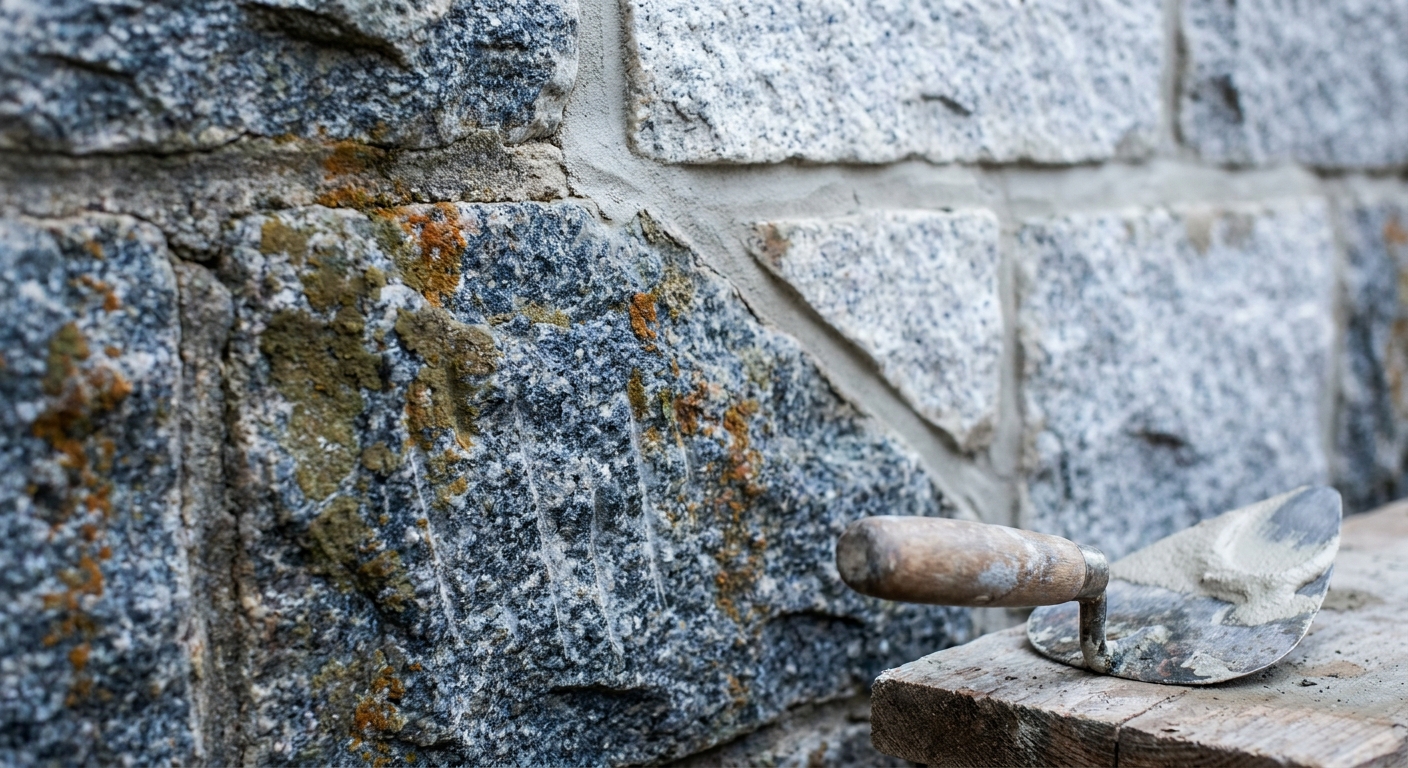
The granite ruins at 2449 Bruce Street — what remains of Lithonia's first public school for Black students — are being rebuilt not as a roped-off monument but as a free, open-air place for the neighborhood to gather. The Arabia Mountain Heritage Area Alliance, working with DeKalb County and the City of Lithonia, is revitalizing the site into a covered, multi-use community space at an estimated cost of $1.8 million, with completion expected in mid-to-late 2026.
Built by the community
The surviving stone structure was completed in 1938 from Lithonia granite, with construction labor contributed by Black quarry workers at a time when the town's granite industry was defining it. Black community leaders and trustees of the earlier Yellow River School purchased the land and raised the money for the schoolhouse themselves.
The school — also known as the Lithonia Negro School and the Lithonia Colored School — was DeKalb County's first public school for African American students and likely among the earliest in Georgia. Its first high-school graduating class, in 1943, numbered three students. The original stone school closed in 1955, when students transferred to a newer equalization school across the street built during Georgia's equalization-school era amid resistance to desegregation; the broader campus remained in use until 1968, when it closed after integration.
Bruce Street School alumna Allene Smith Harper recalled the lesson the school's principal, C. E. Flagg, instilled in his students: "We have ours. You've got to work to get yours". The work is not finished, Harper said, even as the school's next chapter takes shape.
From ruins to gathering place
The plan follows a year of sessions that drew more than 150 participants — alumni, their children and grandchildren, neighbors, volunteers, and elected officials — across seven inclusive meetings. Organizers also conducted oral-history interviews with alumni and community members, collected photographs and records, and ran design-futures workshops in which participants imagined the site's 2038 centennial, describing the atmosphere, events, and uses they wanted there.
What alumni and residents asked for shows up in the plan itself: free public access, wheelchair accessibility, and enough parking, with an open-air structure, a picnic area, a covered amphitheater, a community garden, and a food forest on the site rather than a barricade around it. Former graduates were plain about it — the site should be open to everyone, accessible to people with disabilities, free of charge, and used to tell the school's story: a school built for the community, by the community.
The conceptual design was presented to stakeholders and the public in late 2022, and the work has been funded in part through a yearlong capital campaign soliciting donations for Bruce Street School and other long-term preservation projects. In a city statement, Lithonia officials called the project long overdue, noting that former students are still living and are excited about saving the school. Revonda Cosby, executive director of the Arabia Mountain Heritage Area Alliance, leads the work, with Aleksandr "Sasha" Johnson serving as project coordinator.
Who shapes what comes next
That year of listening will be tested as the project moves toward completion: whether the alumni, their children and grandchildren, and neighbors who helped shape the plan keep that role all the way through. Residents can still add to the story through the project's History Harvest form, by email, on the Alliance's Facebook page, or at 404-998-8384. The heritage area marked its 20th anniversary on October 11, with the effort to rescue the Bruce Street School ruins among its preservation work.
Harper wants the history her school built to outlast her. "I want to see that history carried on," she said, "even though I may not be here to see it".